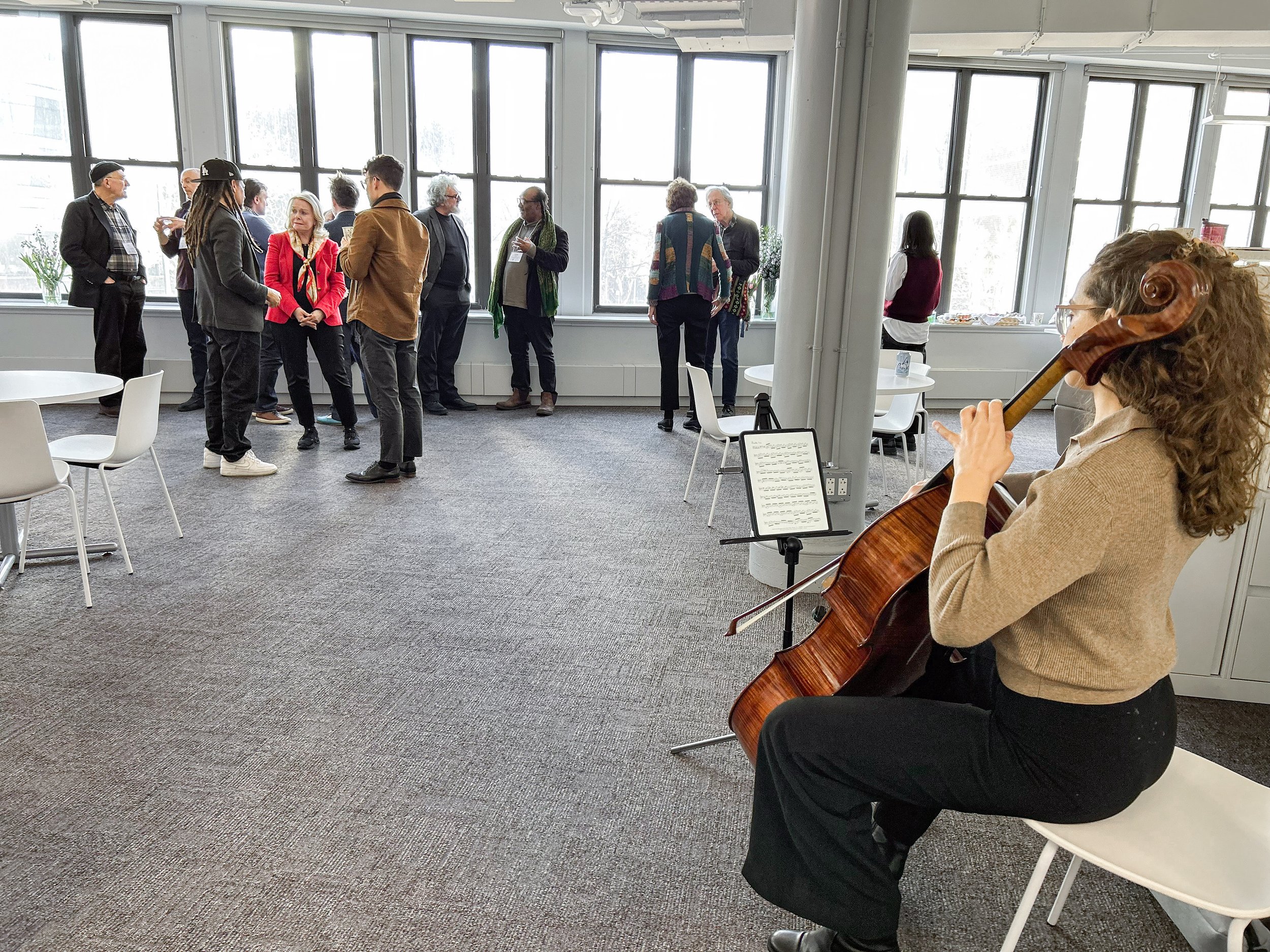
At the center of COMIT's methodology is consultation — a disciplined form of collaborative inquiry that differs in important ways from conventional academic debate or interdisciplinary work. Most scholarly exchange begins with individuals defending positions they have already formed. Consultation begins differently: participants gather around a common question and ask what each person is able to perceive, treating their own views as contributions to a shared search rather than positions to be won. Disagreement becomes a resource for deeper understanding rather than a contest of competing claims. Ideas are offered to be tested and refined, then detached from, rather than defended.
This requires specific qualities in relation to both ideas and people. In relation to ideas: truthfulness, intellectual humility, and the courage to revise one's views. In relation to people: patience, trust, and genuine openness to being changed by what one hears. These are not merely social niceties — trust and frankness are epistemic conditions. They allow participants to think aloud, admit uncertainty, and remain open to insight from unexpected directions. COMIT seeks to create spaces that are both rigorously honest and genuinely collegial.