A global research community rethinking the foundations of society.
We live in a moment of extraordinary change, a moment without historical precedent. A hallmark of this moment is the increasing consciousness that humankind is a single people inhabiting a single planetary home. Yet humanity faces a variety of pressing crises, each causing untold levels of dispossession, dislocation, and despair. We believe these crises reflect a mismatch between the needs of our present age and many of the basic ideas upon which modern societies are built: we inhabit a world bound together by shared ecologies, economies, and fates, yet it is still governed by ideas that treat separateness as fundamental. This age of transition calls for fundamental changes, not just to policies and socio-economic structures, but at the level of thought itself.
What Is Human Oneness?
COMIT treats the concept of human oneness as more than a moral aspiration or a call for unity. By human oneness we mean that humanity is, in a fundamental sense, a single people: not despite our differences, but alongside them. Just as the organs of a body are distinct yet inseparable from the whole, human beings and communities are diverse yet bound together in ways that make each person's wellbeing connected to everyone else's. We share a planet, a biosphere, and an increasingly intertwined set of economic, political, and social systems. What happens in one part of the world shapes what is possible in another. No nation, community, or individual can finally stand outside this web of interdependence.
We recognize that this is not a new idea. But we believe it has become newly urgent, and that taking it seriously as an organizing principle, rather than a vague sentiment, can open new ways of thinking about the challenges humanity faces.
Our Research
COMIT pursues a research agenda organized around a single conviction: that inquiry beginning from the reality of human oneness can transform how humanity understands itself and orders its common life. Guided by this principle and a vision of a more just, peaceful, and prosperous world society, we examine the conceptual foundations of modern civilization and seek to constructively transform them. We strive to transcend the dichotomies that have come to characterize modern thought: between the oneness and diversity of human beings, between human prosperity and ecological flourishing, between scientific advancement and the spiritual heritage of humankind. Our aim is to elaborate a fresh and compelling vision of what human relations could become.
Our Approach
COMIT's approach to inquiry follows directly from its subject matter: if human oneness is real, then the methods through which we seek to understand it must themselves reflect that reality.
The starting point
Reasoning from First Principles
We take the oneness of humankind as our starting point and ask what follows from it, rather than beginning from the assumptions of a particular field or the views of its established authorities.
This kind of reasoning often begins in perplexity: something that prevailing frameworks cannot adequately explain. If humanity is one, why does growing interdependence so often deepen division? Working back from such a problem to the realities and purposes it presupposes can change the question itself before any answer is proposed.
We then test what we construct against evidence, experience, existing scholarship, and practical consequences. When reality resists, we ask where the error lies: in a particular proposal, in an inference we drew, or in our own understanding of the principle. This lets the inquiry correct itself without losing its orientation.
How insight arises and develops
Contemplation
A disciplined form of receptive inquiry: holding a question in silence and sustained attention until something new comes into view.
Many traditions have understood that silence, reflection, and the quieting of the ego can refine attention and heighten perception. Contemplation brings that understanding into intellectual life. A person poses a question inwardly, turns it over, wrestles with it, and keeps pressing while remaining open to what it may disclose.
Its fruit is fresh insight: a hidden relationship becomes visible, a familiar problem reveals a different structure, or a deeper question emerges beneath the first. It depends on humility, sincerity, and a willingness to set aside one's own preferences.
Consultation
A disciplined form of collaborative inquiry, in which participants treat their views as contributions to a shared search rather than positions to be won.
Consultation rests on the conviction that reality is one and that different people perceive different aspects of it. Rather than organizing collaboration by disciplinary representation, it gathers people around a common question and asks what each can see, drawing on their knowledge and experience as well as their moral imagination. Ideas become offerings to be tested and refined, and disagreement becomes a means of discovery rather than a contest.
This asks for truthfulness, humility, and the courage to revise one's views, along with patience, trust, and care for one another. What emerges is often written down, read together, and taken up again, so that understanding deepens over successive rounds.
What makes it possible
Cultivating the Conditions for Insight
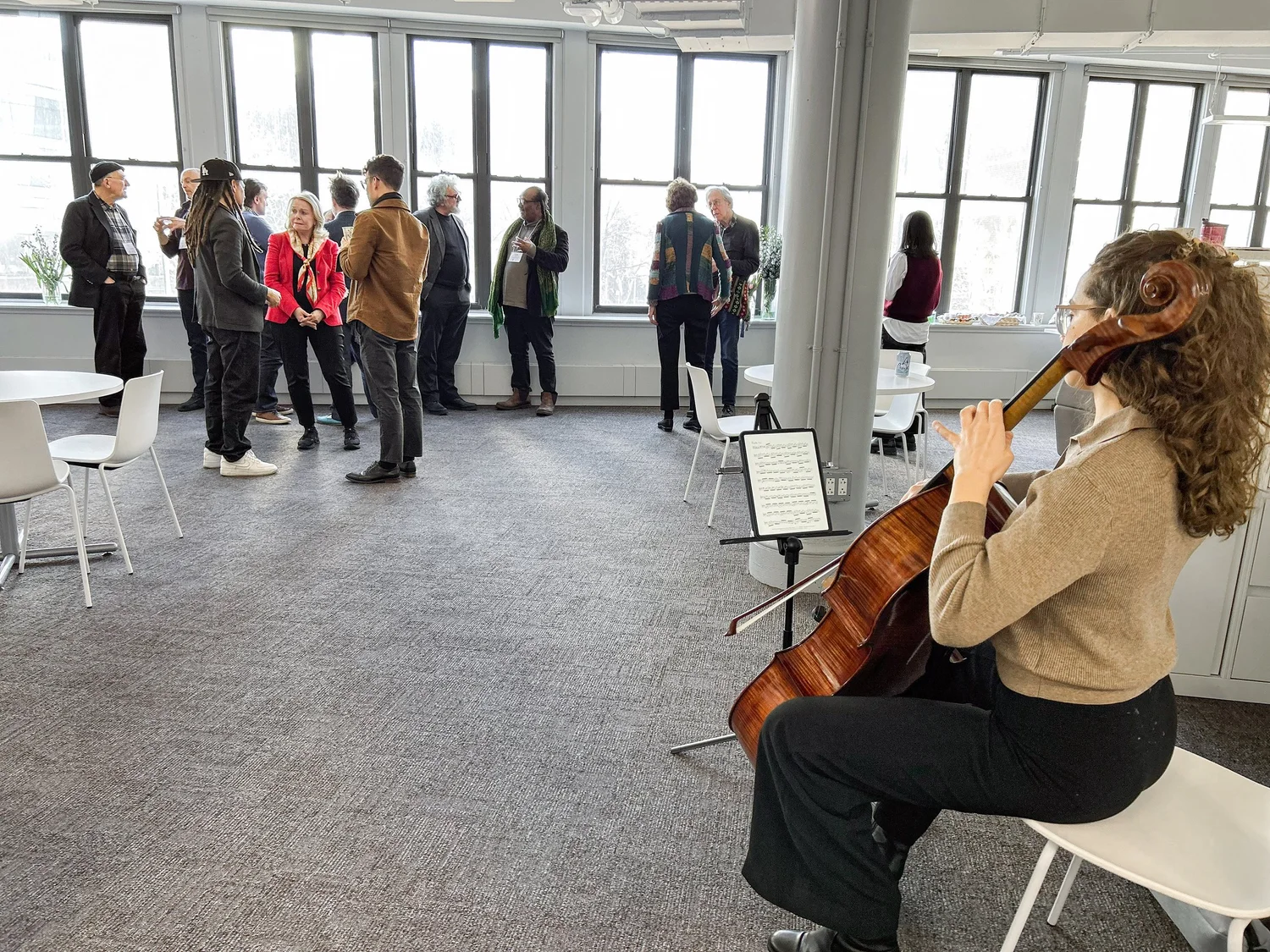
The quality of attention, the trust among participants, and the atmosphere of a gathering are not incidental to the work. They shape what becomes intellectually possible.
In practice, this means being deliberate about how gatherings are designed: who is in the room, how much time participants have together, and whether relationships can develop over many encounters rather than a single event. People need to return to one another and to the questions they share.
It also means attending to friendship, hospitality, and the texture of shared life (meals together, music, beauty) as genuine contributors to the quality of thought. None of this softens the demands of truth. Criticism without care drives people behind finished positions, and warmth without candor protects error. We aim for spaces where people can speak with unusual frankness because they trust that their common commitment runs deeper than any disagreement.
Our Work
Our work is one ongoing conversation about the oneness of humankind, unfolding in many places and drawing in a growing community.
Explore all our work →Public Conversations
Leading scholars and public intellectuals in conversation, opening our core questions to wider audiences.
Explore → 02Workshops & Symposia
Small, intensive gatherings built for candid exchange and the sustained attention deep inquiry needs.
Explore → 03Emerging Scholars
PhD academies and doctoral fellowships that bring scholars into our community of inquiry at formative moments in their work.
Explore → 04Publishing
Open-access volumes from our imprint, Pivot Press, alongside books by scholars across our wider community.
Explore →